It’s a weird modern moment when you can type a question into ChatGPT and get an answer in seconds… then step into a car where there’s no driver, no small talk, no “taking the scenic route,” just a steering wheel turning itself like it’s late for something.
Same three letters. AI. Two totally different vibes.
And if you’ve ever wondered how does chatgpt differ from Waymo AI, you’re not alone. People lump them together because they both feel like magic. But under the hood, they’re built for different worlds, trained on different kinds of data, and judged by different standards. One can be wrong, and you roll your eyes. The other can’t afford that kind of mistake. Not even once.
So, let’s put them side by side, in plain English, without the hype.
The Big Split: Talking Vs Driving
ChatGPT is made to generate and work with language. Ask it to rewrite a passive-aggressive email, explain a mortgage, or help you plan a trip, and it’ll respond using patterns it learned from a massive digital library. It’s essentially the world’s most versatile intern, processing text and audio to find the “next right answer” based on patterns.
Waymo’s AI exists to drive a real vehicle through real streets. It doesn’t “chat” its way through a left turn. It has to perceive what’s around it, predict what happens next, then control a two-ton Jaguar that’s dealing with real-world physics and slick pavement. Waymo calls this a safety-critical problem. They use what they call “demonstrably safe” methods, backed by a Waymo Foundation Model that acts like a teacher for the car’s onboard system.
Same general family of machine learning. Totally different job description. One is trying to be helpful; the other is trying to stay alive.
The Intake And The Output: Digital Tokens Versus Mechanical Muscles
Here’s the cleanest way to picture it.

ChatGPT takes in a prompt. It turns your words into tokens, then predicts what should come next. That “next token prediction” idea is the core of how GPT-style models work, and it’s why they can write smoothly even when they’re not truly “seeing” the world. It’s essentially a very high-level game of fill-in-the-blanks.
Waymo’s system takes in signals from the physical world. Cameras. Radar. LiDAR. These sensors measure distance and motion in real-time. It then uses Sensor Fusion to understand lanes, cars, and the cyclist weaving through traffic on a rainy Friday afternoon.
And the output is the real divider. ChatGPT outputs text, code, or digital content. Waymo outputs physical commands. Brake pressure. Steering angle. Acceleration. Timing. Stuff that can’t be “mostly right.” While a chatbot can afford to be 90% accurate, a car has to be 100% physically correct, every single time.
The Luxury Of A Second Versus The Terror Of A Millisecond
ChatGPT can take a second or two to formulate an answer. Sometimes longer if the servers are sweating. And honestly? Nobody panics. In fact, you might even prefer that slight pause—it makes the reply feel thoughtful, like the AI is actually “chewing” on your question rather than just spitting out a canned response. In the digital world, a five-second delay is just a minor annoyance.
Waymo doesn’t get that luxury. Not even close.
Driving is a game of high-stakes physics and tight timing. When a kid steps off a curb in Santa Monica or a car edges into your lane on the 101, the system has to react. Now. Not in a poetic, well-structured way, but in a “milliseconds matter” way. We’re talking about the difference between a hard brake and a tragedy.
Waymo’s own safety reports lean hard on this. They’ve developed a “Think Fast and Think Slow” architecture (similar to how our own brains work).
- The Fast Path: Handles the split-second reflexes—braking, swerving, avoiding.
- The Slow Path: Uses those bigger, ChatGPT-style models to “reason” about why a road might be closed.
But at the end of the day, Waymo’s bar isn’t just “being helpful.” It’s being perfect in the moment. Because while ChatGPT is an assistant you can ignore, Waymo is a driver you have to trust with your life.
The Real Cost Of Being Wrong: From Annoying Typos To Federal Probes
Now we get to the part people usually gloss over: what happens when things go sideways?
ChatGPT can be confidently, hilariously wrong. It might swap the dates of the Civil War or insist a recipe needs three cups of salt. If you’re paying attention, you catch it. If you’re not? Well, you might paste a hallucination into a work doc and look a bit silly in front of your boss. It’s annoying, sure, but the damage stays digital. OpenAI even has those little “ChatGPT can make mistakes” disclaimers everywhere to cover their backs.
Waymo’s mistakes don’t stay in a chat box. They show up on the evening news as “transportation incidents.”
Look at this past week. On January 23, 2026, a Waymo struck a child near an elementary school in Santa Monica. The car “saw” the kid dart out from behind an SUV and braked hard—dropping from 17 mph to 6 mph—but it still made contact. Thankfully, the injuries were minor, but now the NHTSA is breathing down their necks. This isn’t just a “bug” you patch and forget; it’s a federal investigation into how these machines handle school zones and double-parked cars.
The stakes are why Waymo’s expansion is so slow and deliberate. Just look at the San Francisco International Airport launch on January 29. They didn’t just open the floodgates. You can’t even get dropped off at the terminal yet; you have to get out at the Rental Car Center and take the AirTrain. Why? Because the “cost” of an AI making a mistake in a crowded terminal departure lane is way higher than a chatbot getting a historical fact wrong.
When you ask how does chatgpt differ from Waymo AI, the answer is simple: one fails with a “Network Error”, and the other fails with a 911 call.
Where They Shine (And Where They Trip Up)
Look, it’s easy to get blinded by the hype. We tend to lump “AI” into one big bucket, but comparing these two is like comparing a master chef to an airline pilot. One is here to serve you; the other is here to keep you alive.
The Breakdown: Strengths vs. Flaws
Quick Comparison Table
| Feature | ChatGPT (The Digital Brain) | Waymo AI (The Physical Driver) |
|---|---|---|
| Top Strength | Versatility — it can write code and a grocery list | Precision — it never gets tired or distracted |
| Biggest Flaw | Hallucinations — it can be confidently wrong | Geofencing — limited to specific cities |
| Real-World Gear | Cloud servers and an internet connection | LiDAR, radar, and cameras (a $100k+ sensor stack) |
| Latest Win | Uses GPT-5.2 Thinking for deeper reasoning | Passenger pickups at SFO Airport |
ChatGPT: The Universal Intern
The real power here is versatility. You can ask it to explain quantum physics to a five-year-old, then immediately pivot to debugging a broken website. It scales to millions of people instantly because it doesn’t have a “body” to move. Its human-like interaction is spooky—it understands tone, sarcasm, and context better than some of my coworkers.
The Reality Check: It has zero real-world awareness. It doesn’t know it’s raining outside your window unless you tell it. And those “hallucinations”? They’re still a mess. It can confidently invent a legal case that never happened, which is fine for a creative story but a disaster for actual research.
Waymo AI: The Precision Guardian
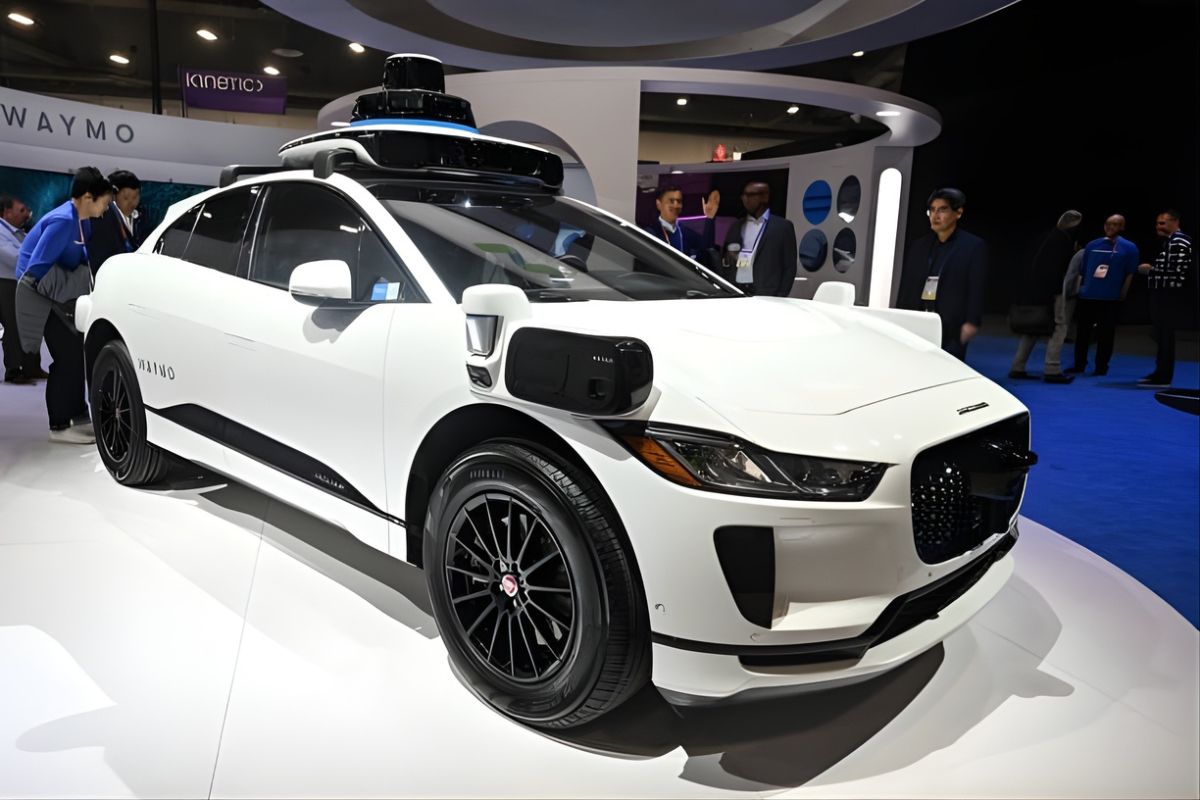
Waymo wins on real-world autonomy. It has a 360-degree view that makes human vision look like a joke. Its advanced perception can track fifty different objects—cyclists, dogs, balls rolling into the street—at once. It doesn’t get “road rage.”
The Reality Check: It’s incredibly expensive. Between the Jaguar I-PACE and the sensors, these things are massive capital investments. Plus, its limited deployment is frustrating. As of this week, you can finally take one to SFO, but they still drop you at the Rental Car Center rather than the terminal door. Why? Because the physical world is complicated, and the “cost of failure” for a car is a 911 call, not just a “Network Error.”
Can We Even Compare Them?
Honestly? Not really. We need task-specific AI because the stakes are different. We want our chatbots to be creative and a bit “loose” so they can brainstorm with us. But we want our cars to be rigid, boring, and obsessed with the rules. You don’t want a “creative” car that decides to see what happens if it drives on the sidewalk.
What’s Next: The Great Convergence
By late 2026, the walls are starting to crumble. Waymo is now using tech similar to ChatGPT (Google’s Gemini) to help its cars “reason.” For example, if the car sees a vehicle on fire, it doesn’t just see a “blocked lane”—it understands the danger and decides to turn around. We’re moving toward Multimodal AI, where the “Digital Poet” and the “Physical Guardian” finally start talking to each other.
To wrap this up, the biggest takeaway isn’t that one of these systems is “smarter” than the other. It’s that they are built to solve fundamentally different types of problems. ChatGPT is our first real taste of a universal information layer—a tool that can help us think, write, and create across any digital medium. Waymo is our first real taste of a universal movement layer—a system that can navigate the messy, physical reality of our cities more safely than we can.
As we move deeper into 2026, the lines will continue to blur. With the release of GPT-5.2, we’re seeing chatbots that can finally “reason” through complex, multi-step tasks with human-expert precision. Meanwhile, Waymo’s expansion to SFO and its integration of Gemini-based logic show that even a car needs a “brain” that understands context, not just coordinates.
Honest Takeaway
The “Great Convergence” is definitely on the horizon—you can already see it in the code. We’re moving toward a world where the same brain that drafts your emails will be the one explaining, in plain English, why your car just took a sudden detour through a side street. But for right now? That line in the sand is still pretty deep.
Trust ChatGPT with your ideas, your brainstorming, and your rough drafts. But when it comes to the morning commute? You trust Waymo. They might share some of the same “thinking” DNA, but they live in two completely different universes.
Look at this week alone. While we’re playing with GPT-5.2’s new “Thinking” mode to solve logic puzzles, Waymo is out there dealing with the brutal reality of the 101 freeway and the fallout from that Santa Monica incident on the 23rd. It’s a vivid reminder that a “Network Error” in a chat window is just a minor annoyance that you fix with a refresh button. A “Physical Error” in a school zone is an entirely different weight to carry.
We’re living through the age of the specialists: the digital poet and the robotic guardian. And honestly, looking at how unpredictable the real world is, we should probably be glad they each still know exactly where they belong.
Sources and References
- People Magazine: “Waymo Car Hits Child Walking to School During Drop-Off, Prompting Investigation” (January 29, 2026).
- The Guardian: “US regulators open inquiry into Waymo self-driving car that struck child in California” (January 29, 2026).
- SFO Official Media: “Waymo Approved to Begin Passenger Service at SFO” (January 29, 2026).
- PCMag: “Waymo Robotaxis Can Finally Go to SFO, But Don’t Try It If You’re in a Hurry” (January 30, 2026).
- Waymo Blog: “Demonstrably Safe AI For Autonomous Driving” (December 8, 2025).
- Waymo Blog: “Introducing Waymo’s Research on EMMA: End-to-End Multimodal Model for Autonomous Driving” (Explaining Gemini-based reasoning integration).
- OpenAI Help Center: “ChatGPT Release Notes: January 2026 Updates and GPT-5.2 Architecture” (January 2026).
- The Economic Times: “ChatGPT Prism: What are the new features of OpenAI’s all-new GPT-5.2?” (January 28, 2026).