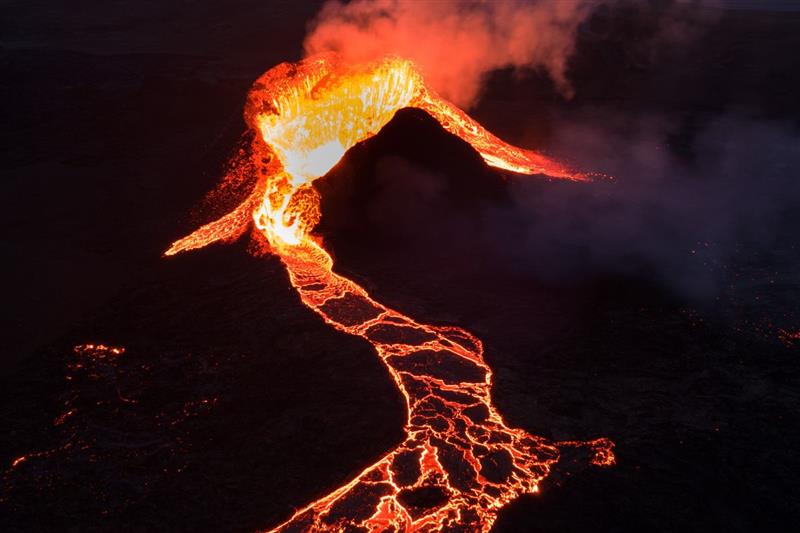
Sometime around 1345, a volcano erupted. Nobody saw it. Nobody wrote it down. But that eruption likely killed 30 to 60 million people in Europe during the following decade. Sounds dramatic, right? But fresh research from December 2025 makes a pretty strong case that a volcanic eruption-Black Death connection isn’t just possible. It’s what actually happened. And the manner in which it unfolded is both fascinating and terrifying.
When Tree Rings Tell Stories
The Black Death struck Europe in 1347. Vessels from the Black Sea had brought grain to Italian ports. Plague-infested fleas were hiding in those grains. In just a few years, half of Europe was dead. Historians had for centuries been telling this story about a siege in which Mongol armies used plague bodies as projectiles, flinging them over city walls. Turns out that those are totally false.
The reality features tree rings, ice cores, medieval documents and a volcano that scientists to this day cannot identify. Ulf Büntgen at Cambridge examines tree rings, which are essentially climate records in wood. He discovered something strange in the Spanish Pyrenees. There were successive “blue rings” in trees from the years 1345, 1346, and 1347. Blue rings develop when trees suffer particularly cold, wet summers.
Not just one bad summer but, instead, three in a row. That pattern screams volcano. When big volcanoes blow, they pump sulfur into the atmosphere. Creates a haze that blocks sunlight and drops temperatures for years. Ice cores from Greenland and Antarctica showed elevated sulfur levels around 1345. Something big erupted somewhere, probably in the tropics.
The Famine Nobody Expected
Cold, wet summers mean bad harvests. By late 1345, northwestern Italy was facing crop failures. Medieval documents describe heavy rain and ruined wheat. Italian city-states like Venice and Genoa couldn’t feed themselves even in good years. In bad years? They were screwed. So they imported grain from the Black Sea region. Ships sailed east, loaded up near modern Ukraine and Crimea, and sailed back. Problem solved, except those grain stores weren’t just carrying food. They were carrying rat fleas infected with plague.
How Fleas Made the Journey
Here’s the part that makes this work. Rat fleas can survive for months on grain dust. They don’t need actual rats during the voyage. The grain keeps them alive long enough to make the trip from the Black Sea to Italy. Martin Bauch, a medieval historian in Germany, found records of grain imports and shipping logs. Then he met Büntgen at a conference and realized they were both looking at the same weird years from different angles. “A lot of things needed to come together,” Büntgen said. “If only one weren’t there, this pandemic wouldn’t have happened.”
Why Some Cities Escaped
Not every Italian city got hit. Rome and Milan largely escaped. Why? They were surrounded by grain-producing areas. They didn’t need to import food like Venice and Genoa did. Venice got slammed because it was connected directly to Black Sea ports. The first plague cases showed up just weeks after the last grain ships arrived in late 1347. From there, it was textbook. Fleas infected local rats first. Once the rats died, fleas switched to humans. Then it spread like wildfire across a continent with no immunity.
The Chain of Events
Let’s walk through it. An unknown volcano erupts around 1345. Sulfur blocks sunlight. Temperatures drop. Southern Europe gets three years of cold, wet summers. Crops fail. Italian cities face famine. They import the grain from the Black Sea. Vessels transporting that grain also carry infected fleas. The flea lives by feeding on grain dust. Ships call at Venice and Genoa. Fleas jump to local rats. Rats die.
Fleas jump to humans. Volcanic eruption – Black Death spreads across Europe. 30% to 60% of those infected die. If that volcano doesn’t erupt, crops don’t fail. If crops don’t fail, Italy doesn’t import grain. If they don’t import grain from the Black Sea, plague doesn’t arrive when and how it did.
Why This Matters Now
We’re talking about 680 years ago. Why does it matter? Because plague is still around. Yersinia pestis still circulates in rodent populations globally. Cases happen every year in places like the American Southwest. And the lesson isn’t just about plague. It’s about how climate events, economics, and disease interact in ways we don’t predict. COVID should’ve taught us that pandemics happen when multiple factors align.
The Black Death was exceedingly unlikely, according to Kyle Harper, who studies ancient pandemics. “If you’re playing the odds, that should never happen.” But it did. Three times in history we’ve seen plague outbreaks of this scale. Understanding past pandemics helps us think about future ones. Especially now with global trade networks that make medieval grain routes look quaint.
The Detective Work
This study combines tree ring analysis, ice core chemistry, medieval history, epidemiology, and climate science. Each piece alone doesn’t tell much. Together, they’re convincing. Bauch found volcanic clues in weird places. People in China and Bohemia reported lunar eclipses when there shouldn’t have been any. Particle-laden skies from volcanic ash probably altered how the moon looked. That’s the kind of detail that makes this feel solid. Not speculation. Careful detective work across multiple sources, all pointing to the same thing.
What We Still Don’t Know
We still don’t know which volcano erupted. Could’ve been one big one or multiple smaller ones. Scientists are looking, but finding an unrecorded 14th-century tropical eruption isn’t easy. And we’re still learning about plague transmission. It’s complex. Bacteria, fleas, multiple rodent species, and humans all interacting. Every study adds pieces. What’s clear is the connection isn’t some wild theory. It’s carefully researched and supported by evidence. Climate drove crop failure. Crop failure drove trade changes. Trade changes brought plague to Europe at precisely the wrong moment.
The Bottom Line
Half of Europe died after the volcanoes erupted at precisely the wrong moment, ruining crops and driving Italian merchants to import grain from plague-infested regions. The true story includes centuries of plague in Central Asia, trade networks, rat populations, and climate shift,s and probably a dozen other factors that we don’t entirely understand. But the volcano was the trigger. Without that climate shock, the timing changes.
The grain imports don’t happen when they did. Maybe the Black Death will still reach Europe eventually, but maybe not with the same impact. Makes you wonder what unrelated occurrences today are setting up tomorrow’s disasters. Climate change, global trade, and new diseases. We have the makings of a second perfect storm. Here’s hoping we’re better at recognizing it when it heads our way this time.