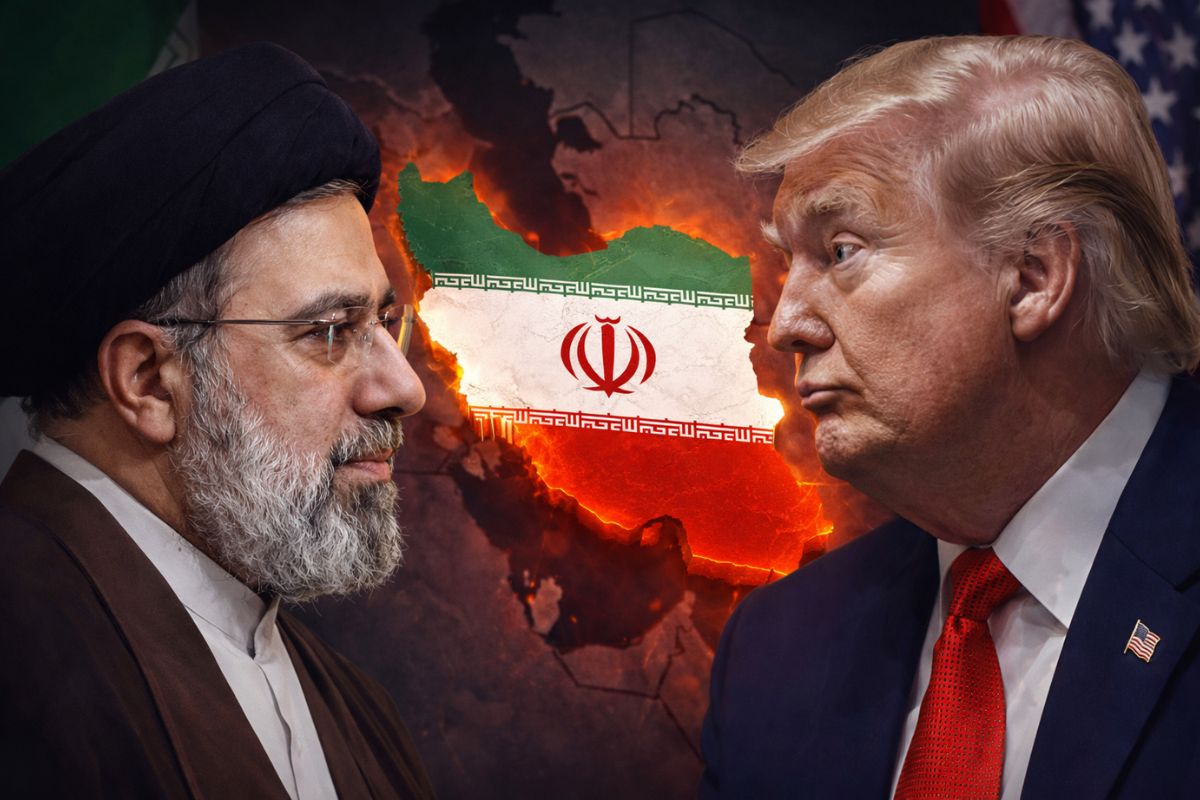
Diplomatic channels in the Middle East have suddenly crackled into life following a month of devastating aerial bombardment. Having seen its nuclear and ballistic infrastructure driven to the brink by weeks of “Operation Epic Fury” that methodically decimated much of the Islamic Republic’s capabilities, Iran signals a path to end the war—but with strict new demands so strident they have reverberated through Western capitals. The offer, relayed through intermediaries in Islamabad and Muscat, indicates that Tehran is seeking an off-ramp so it can avoid what could be a destructive ground invasion in the coming days. But the price it’s putting on a ceasefire is far steeper than anything many in the international community were anticipating.
The change in tone comes at a pivotal moment. As Israeli and American attacks reach deep into Iran’s own heartland, the ruling elite is under internal pressure to stabilize a failing economy while remaining faithful to its revolutionary roots. However, the Iranian New Demands are not a surrender. Instead, they appear to be a strategic pivot, attempting to trade military concessions for long-term economic sovereignty and a guaranteed end to Western intervention.
The Breakdown: Tehran’s “Five Pillars” for Peace
The goalposts have been moved by President Masoud Pezeshkian and Foreign Minister Abbas Araghchi. They have stopped talking about a simple “stop-start” cease-fire. They seek a “comprehensive settlement” that redraws the map of the Middle East. According to a detailed briefing from the International Crisis Group, the Iranian counteroffer is centered on five imperatives that cannot be negotiated.
First and most contentiously, Iran is seeking formal “war reparations.” This demand represents a major escalation in diplomatic rhetoric. Tehran is demanding vast monetary reparations for the obliteration of its industrial core, specifically naming the Mobarakeh Steel plant and several vital energy hubs in the Khuzestan province. The argument is that since the strikes were on civilian-adjacent infrastructure, the international community has to pay for reconstruction.
Second, the Iranian New Demands include a radical proposal for the Strait of Hormuz. Tehran is seeking formal, written recognition of its right to levy “transit fees” on all vessels passing through the chokepoint. In effect, they are trying to turn a strategic military asset into a primary state revenue stream. This has already caused a stir at the International Maritime Organization, as it would effectively end the era of free, untaxed navigation in the world’s most important oil lane.
Read Also: The Real Reason the U.S. and Iran are Colliding Right Now
The U.S. Counter-Offer: Trump’s 15-Point Ultimatum
While Tehran signals its conditions, the White House has remained firm on its own framework. President Donald Trump has extended a final diplomatic window until April 6, 2026. If the Iranian New Demands clash too violently with the U.S. 15-point plan, the threat of a ground operation remains on the table.
The American plan is focused almost entirely on “irreversible dismantlement.” It requires the total removal of centrifuges from Natanz, Isfahan, and the underground Fordow site. To sweeten the deal, the U.S. has proposed a regional enrichment consortium. This would see countries like the UAE, Qatar, and Saudi Arabia managing Iran’s civil nuclear needs under strict external supervision.
Look, the reality on the ground is messy. While Trump recently suggested on social media that Iran is “starting to behave” and even shipping “boatloads of oil” as a peace offering, Iranian state media has been quick to push back. They’ve labelled these claims as psychological warfare intended to manipulate the global oil price, which has been dancing around the $100 mark for weeks.
Conflict Status: The Pressure Cooker (March 31, 2026)
The diplomatic dance is happening under the shadow of massive military hardware. Over 50,000 U.S. troops are currently stationed across the Gulf, and Israeli jets continue to conduct “surveillance strikes” around Tehran to ensure no hidden assets are being moved during the talks.
| Factor | Current Status | Impact Level |
|---|---|---|
| Military Force | 50,000+ U.S. troops in theater; arrival of 82nd Airborne & 31st MEU ground units. | Critical |
| Global Energy | Brent Crude surged to $114.39; WTI at $106.48 as of 00:45 BST. | Extreme |
| Broker Roles | Pakistan, Qatar, and Egypt are leading “shuttle” diplomacy for the 15-point plan. | Moderate |
| Hardline Stance | Speaker Ghalibaf rejects a “cycle of ceasefires” and warns of ground war retaliation. | Increasing |
The Institute for the Study of War (ISW) notes that the death of former lead negotiator Ali Larijani has left a vacuum that hardliners are eager to fill. This situation makes the Iran New Demands even more dangerous; if the West rejects them outright, the “hawks” in Tehran may push for a total exit from the Non-Proliferation Treaty (NPT), effectively going for a “breakout” nuclear capability as a last resort.
Read Also: Is the United States Entering a Second Era of Superpower Dominance? What the 2026 Data Reveals
The Maritime Standoff and the “Transit Fee”
The demand for sovereignty over the Strait of Hormuz is perhaps the most difficult pill for the West to swallow. Iran has recently started issuing “coordination letters” to international shipping companies. They aren’t blocking the Strait—yet—but they are requiring “non-hostile” ships to register with IRGC intermediaries.
The Associated Press reports that this is essentially a “protection racket” on a global scale. If the U.S. agrees to this as part of a peace deal, it would set a precedent that could change maritime law forever. But if they refuse, Iran has hinted it has “asymmetric capabilities” ready to sink tankers and trigger an energy catastrophe that would dwarf the 1970s crisis.
FAQ
Why is Iran demanding money (reparations) if they are losing the war?
Tehran is using its remaining leverage—the ability to destroy global oil markets—to claim they are “negotiating from strength.” By demanding reparations, they are trying to save face domestically and ensure their economy doesn’t collapse the moment the guns fall silent.
Will the U.S. really allow Iran to tax the Strait of Hormuz?
It is highly unlikely. The U.S. Navy has spent decades ensuring “freedom of navigation.” However, some analysts suggest a middle ground where Iran receives a “service fee” for search and rescue or environmental monitoring, rather than a “transit tax.”
What happens on April 6, 2026?
This is the “Trump Deadline”. If Iran’s new demands are not addressed in accordance with the 15-point U.S. plan by that date, the Pentagon has indicated that “Operation Epic Fury” will enter a second phase of escalation, including ground troops and a total blockade of Iranian ports.
Is Hezbollah involved in these peace talks?
Yes. Tehran also made it clear that “peace is indivisible.” They do not intend to agree to any deal that permits Israel to carry out operations against Hezbollah in Lebanon. This “linkage” is among the greatest points of contention for the Israeli government.
Summary of the Diplomatic Crossroads
- Iran Signals Path to End War—But With Strict New Demands, including cash for damages and control of the Strait.
- The U.S. is pushing a 15-point plan focused on the destruction of Iran’s nuclear infrastructure.
- Oil prices are volatile, reacting to every tweet and state media broadcast from the region.
- Pakistan’s Army Commander is currently in Tehran acting as the primary bridge for the U.S. proposal.
So, that is where things stand. We’ve got a week of high-stakes poker ahead of us. If the diplomats can’t find a way to make these “new demands” fit into the 15-point plan, April is going to be a very dark month for the region. Honestly, the next 48 hours of “shuttle diplomacy” in Islamabad will tell us everything we need to know.
Sources and References
- Primary Diplomatic Analysis: International Crisis Group: Iran-US/Israel Flashpoint – March 2026 Briefing – Detailed breakdown of the “Five Pillars” of Tehran’s counter-proposal and the role of intermediaries.
- Military Intelligence: Institute for the Study of War (ISW): Iran Update – Special Report on Operation Epic Fury – Technical assessment of the 15-point U.S. dismantlement plan and the impact on the Arak and Natanz facilities.
- Official Statement: Al Arabiya English: Iranian Foreign Ministry on ‘Excessive’ U.S. Demands—Verification of the Iranian government’s refusal of direct face-to-face negotiations.
- Maritime Law & Trade: Associated Press (AP): The Battle for the Strait of Hormuz – New Transit Fees and Global Shipping – Report on the IRGC’s coordination letters and the potential impact on international maritime law.
- Economic Impact: The Guardian: Oil Prices Hit $100 as Trump Deadline Looms – Analysis of market volatility in response to the April 6, 2026, diplomatic deadline.
- Nuclear Policy: Arms Control Association: Iran’s Potential NPT Withdrawal and Strategic Balance—Expert commentary on the legislative push within the Iranian Parliament for nuclear “breakout” capability.
Recommended