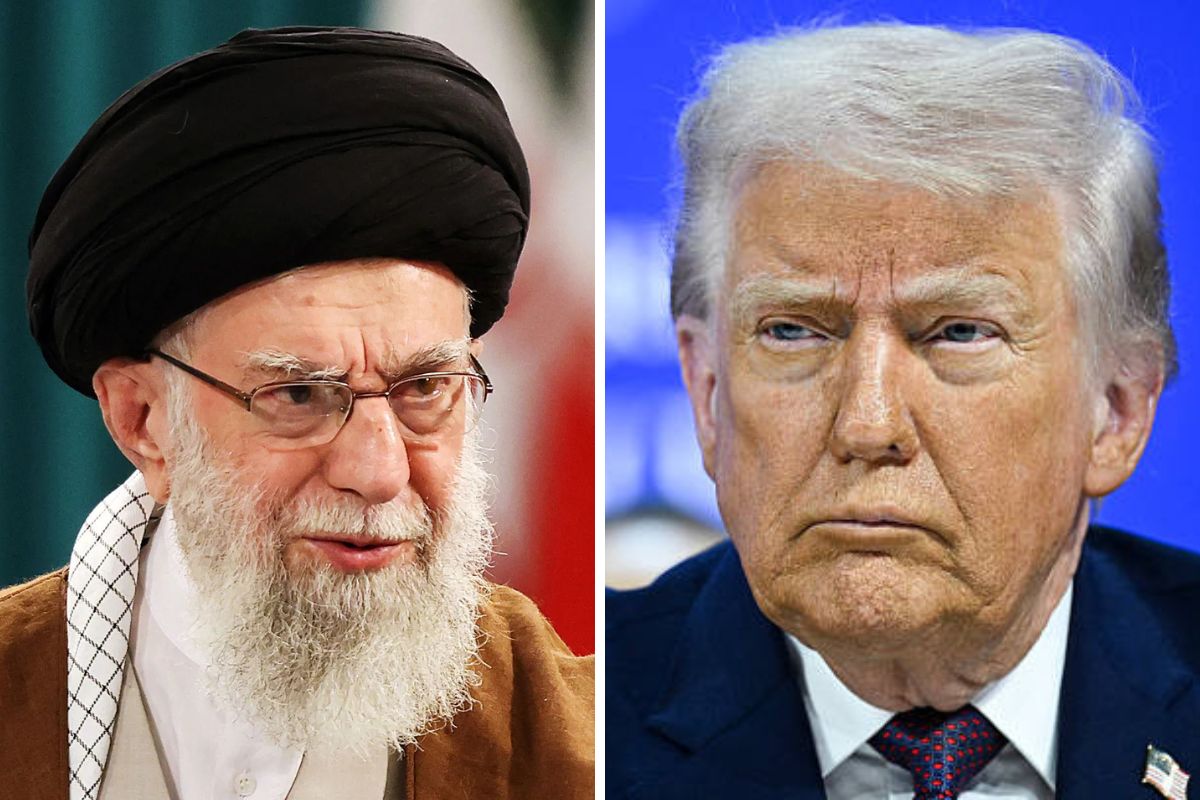
On January 23, 2026, President Trump spoke from Air Force One while returning from Davos. He confirmed a massive “armada” is steaming toward the Middle East “just in case”. According to CBS News, the USS Abraham Lincoln carrier strike group—carrying 5,000 sailors and Marines—is currently in the Indian Ocean, just days away from the Persian Gulf.
The response from Tehran has been a flat-out refusal to blink. A senior official told Reuters this weekend that Iran will treat any attack—even a “limited” one—as “all-out war.” So, is the US going to war with Iran, or is this just the most expensive game of “chicken” in history? As of January 25, 2026, here is the straight take on the signals.
Why the Temperature Just Hit Boiling Point
A lot of the current panic comes from three massive, simultaneous developments that weren’t here a month ago.
1. The “January 8 & 9” Massacre
The primary trigger for the “armada” is a horrific spike in violence inside Iran. Although the government of Iran claims an official death toll of 3,117 people, a bombshell report from Time Magazine (published today, Jan 25) says the real number is almost certainly closer to 30,000 killed in a two-day slaughter on January 8th and 9th.
Health officials leaked to Time that there were no more body bags in hospitals, which had instead begun hauling off the dead with semi-trailer trucks. President Trump has made the movement of these ships a direct response to these massacres, warning Tehran that the United States will not stand by while “mass murder” is employed to crush the protests.
2. The Post-Davos Shift
When Trump says “armada,” people listen. By diverting the USS Abraham Lincoln from its South China Sea patrol, the U.S. is signaling that Tehran—not Beijing—is the #1 priority for the rest of the winter.
3. The “12-Day War” Hangover
We can’t forget last summer. Israel and the U.S. conducted surgical strikes on Iranian nuclear sites in June 2025 (the “12-Day War”). As PBS’s Washington Week noted on January 23, the fear now is that the U.S. is looking to “finish the job” while the Iranian regime is weakened by internal revolt.
Deterrence vs. War: Are We Already Over the Line?
Look, we need to be clear about the difference between “war” and what we’re seeing right now. A real war is the end of the road—a deliberate, state-on-state fight. What we’ve lived through for years—shadow wars, Houthi drones, and cyber hits—is just the “background noise” of the region.
Deterrence is the ultimate poker move: “I’m showing you my gun so I don’t have to pull the trigger.”
Right now, the U.S. move is Maximum Deterrence. Trump isn’t saying he’s launched a strike yet; he’s letting the aircraft carrier do the talking. He’s gambling that the sight of 5,000 Marines will make the regime stop the executions.
But here’s the problem: Deterrence only works if there is an “exit ramp.”
Right now, that ramp is looking pretty narrow. When an Iranian official tells Reuters that any hit will be treated as “all-out war”, they are burning the bridge. They’re telling Washington that there’s no such thing as a “small” strike anymore. This is where things get dangerous. If a single drone pilot in the Persian Gulf gets jumpy, we don’t just get a headline—we get a regional firestorm.
Read Also: Do Midterm Elections Affect The President in 2026? – Here’s How It Actually Works
Why 1979 Still Matters in 2026
You can’t understand why the White House is sending an armada today without looking at the scars from 1979. To the U.S. foreign policy establishment, Iran is not just another country; it’s the country that took over a U.S. embassy and held 52 Americans hostage for 444 days.
That event not only ended the Carter presidency; it baked a permanent “never again” mindset into U.S. politics. It’s why in January 2026 the talk from Washington sounds so personal.
Decades of “shadow war”—nuclear standoffs, proxy hits in Iraq, and last summer’s “12-Day War”—have built a mountain of distrust. When President Trump talks about “watching very closely” while the carrier moves in, he’s speaking to a base that remembers 1979 and 2020.
Iran’s Leverage: Why Washington Is Genuinely Nervous
Iran doesn’t need to win a traditional land invasion to break the global status quo. They have a “geographic veto,” and they know exactly how to use it.
The main card they have in their hand is the Strait of Hormuz.” On Jan. 23, 2026, Reuters wants us all to remember that approximately one-fifth of the world’s daily oil — and nearly a quarter of its global LNG — passes through this 21-mile-wide gap. The U.S. Energy Information Administration (EIA) recently confirmed that while Saudi Arabia and the UAE have built bypass pipelines, over 9 million barrels per day simply have no other way out.
This isn’t just a “Middle East problem.” It’s a “your wallet” problem. Even a week-long disruption there hits your life in forty-eight hours. We’re talking about a spike in shipping insurance that makes your next flight or grocery delivery noticeably more expensive. Gas prices wouldn’t just creep up; they would jump.
The Navy History That Haunts 2026
If you think this massive naval buildup is just a photo op, you’re ignoring the blood in the water. Standoffs in the Persian Gulf don’t “escalate” slowly—they explode in minutes. And the U.S. Navy has been working in the shadow of a very particular ghost: Operation Praying Mantis.
April 1988. The U.S.S. Samuel B. Roberts was almost broken in half by an Iranian mine. Washington raised a protest not just in ink, but in fire. In a day of confusion, the US Navy fought its largest surface battle since WWII as it traded anti-ship missiles with Iranian forces and set about torpedoing half of Iran’s operational fleet by nightfall.
Why does this matter on January 25, 2026? Because the waters the USS Abraham Lincoln is entering right now are infinitely more lethal than they were in the 80s. We aren’t just talking about frigates anymore. We’re talking about AI-driven “swarm” boats, stealthy mobile batteries, and the F-35Cs on the Lincoln’s deck specifically designed to hunt them.
There is no “buffer zone” in 2026. With both sides employing automated sensors and fast drones, the difference between a “warning shot” and “sinking” has collapsed to seconds. When you hear about the “just in case” movement of a carrier, understand its design: it’s a weapon, ready to fire. History teaches us that in this part of the world, any jittery commander or misidentified radar blip can turn a standoff into a graveyard before the White House even gets the update.
Read Also: Top 10 World Leaders Who Changed Global Politics
The “Tripwires”: What Could Pull the Trigger?
Wars rarely start with a formal invitation. They start when one side makes a move that the other side can’t afford to ignore.
- The “Red Line” on Domestic Violence: Trump has explicitly labeled the reported 36,500 deaths from the January 8 and 9 massacres as a “red line.” If more reports leak out—like the ones today from Time about hospitals being used as morgues—the White House may feel forced to launch “punitive” strikes.
- The “Shadow Fleet” and the Strait: Two days ago, the U.S. moved to freeze the assets of “shadow fleet” ships moving Iranian oil. If Tehran responds by harassing commercial tankers to prove they still control the tap, the U.S. Navy’s rules of engagement are already set for a response.
- The Unpredictability Factor: On January 23, PBS’s Washington Week framed it perfectly: is the USS Abraham Lincoln there to prevent a fight or to start one?
The “Watch List”: How to Spot a War Before It Starts
If you want to cut through the noise, stop listening to the slogans. Slogans are for rallies. Instead, keep your eyes on the physical moves:
- The “Armada” Timeline: Watch how long the Lincoln stays “on station.” If more strike aircraft—like the F-15Es recently sent to Jordan—keep pouring in, that’s when “deterrence” looks more like a “countdown.”
- The Whisperers: Since D.C. and Tehran aren’t talking, watch Switzerland or Oman. If those diplomatic channels go silent while the military rhetoric ramps up, that’s a bad sign.
- The “Shadow War” Triggers: Watch for “inspections” of oil tankers or a high-casualty proxy rocket on a U.S. base.
- Ignore the “Viral Panic”: During blackouts, news becomes a game of telephone. If a death toll doesn’t have a verified source like HRANA, treat it as smoke, not fire.
So, Is the U.S. Going to War With Iran?
Here’s the unfiltered reality for January 25, 2026.
Right now, we aren’t looking at a pre-planned invasion. We’re looking at a high-stakes squeeze. By parking the USS Abraham Lincoln strike group in the Indian Ocean, Trump is trying to buy leverage with steel. He wants the “armada” to do the talking so he doesn’t have to. The goal? Force Tehran to stop the hangings and abandon what’s left of their nuclear program after last summer’s strikes.
But “deterrence” is a fragile shield.
The margin for error has basically vanished. You have a U.S. president who just warned Iran they’d be “wiped off the face of the earth” if they strike back and IRGC leadership claiming their “finger is on the trigger.” In an environment this toxic, you don’t need a formal declaration of war to start the fire. All it takes is one jumpy drone operator in the Strait of Hormuz or a single miscalculated proxy hit on a U.S. base to turn this “standoff” into a regional war by tomorrow morning.
The next few weeks are the “tripwire” phase. If the diplomats in Oman and Switzerland can’t find an exit ramp, the “just in case” armada will stop being a warning and start being a weapon. In the Persian Gulf, nobody stays “ready” forever—eventually, someone acts.
Frequently Asked Questions: January 2026 Crisis
1. Is the “Armada” actually going to strike, or is it a bluff?
The honest answer? Nobody knows—including, likely, the people on the ships. The USS Abraham Lincoln is a “message in a bottle” with 50 strike aircraft. In 2026, Trump’s strategy is often about creating enough “unpredictability” that the other side stops moving. It’s a bluff until the moment it isn’t.
2. Why is the January 8 & 9 massacre the “red line”?
Because of the scale. While previous protest waves had hundreds of deaths, the 30,000+ figure reported by Time today (Jan 25) puts this in the category of a crime against humanity. Washington’s argument is that ignoring a slaughter of that magnitude makes the U.S. look weak—and Trump hates looking weak.
3. What happens to gas prices if the Strait of Hormuz closes?
They won’t just go up; they’ll “gap” up. If 20% of the world’s oil is cut off, analysts expect a $30 to $50 spike per barrel almost instantly. You’d see it at the pump in the U.S. within 72 hours.
4. Can Iran actually sink a U.S. aircraft carrier?
Sinking one is nearly impossible due to the “layered defense” of the strike group. However, “mission killing” one—damaging it enough with a swarm of cheap drones or a lucky missile so it can’t launch planes—is a very real 2026 threat. That’s what keeps Navy commanders up at night.
5. Is there a “Peace Path” left?
Yes, but it’s narrow. It requires Tehran to pause the executions and Washington to accept a “frozen” status quo. Currently, both sides are talking about “all-out war” and “red lines,” which makes finding an exit ramp incredibly difficult.
Current Regional Status (As of Jan 25, 2026, 19:00 EST):
- USS Abraham Lincoln: Transiting Arabian Sea (Estimated Gulf arrival: 48–72 hours).
- Iran Alert Level: “Finger on the Trigger” (Highest Readiness).
- Global Oil (Brent): Trending toward $64/bbl; high volatility expected.
Sources & References
- Time Magazine: Iran Protest Death Toll Could Top 30,000, According to Local Health Officials (Published Jan 25, 2026).
- Reuters: Iran Warns Any Attack Means “All-Out War” as US Armada Approaches (Published Jan 24, 2026).
- USNI News: Carrier Lincoln Enters Indian Ocean En Route to Middle East (Published Jan 19, 2026).
- The Hindu / Reuters: U.S. Imposes New Sanctions on Iran’s “Shadow Fleet” After Crackdown (Published Jan 23, 2026).
- PBS Washington Week: Clip: Will Trump Attack Iran in 2026? Analysis of Davos & Armada Rhetoric (Aired Jan 23, 2026).
- U.S. Energy Information Administration (EIA): The Strait of Hormuz: The World’s Most Vital Oil Chokepoint.
- U.S. Department of State: The Iranian Hostage Crisis (1979–1981).
- Naval Historical Society of Australia: Operation Praying Mantis: The Largest Surface Naval Battle Since WWII.
Recommended